Questions or interested to participate in my project suse the contact form.
Do you want to monitor the sun? Push here.
We are approaching very bad space weather, so watch out.
J.Konstapel, Leiden, 11-11-2025.
Yesterday i wrote about Ideogram 142: The Labyrinth.
It was a big surprise to me that the prediction in 3117 BC by Pharaoh Narmer seems to be coming true.
In this blog I tell you what could happen and how to prepare yourself.

Solar Cycle 25, now in protracted maximum through late 2025, exhibits 40% higher activity than forecast, generating frequent X-class flares and geomagnetic storms.
Simultaneously, the Bronze Mean sequence—a mathematical progression observed in natural systems from atomic spectra to governance scalability—offers a topological framework for understanding systemic transition.
This brief examines observable heliophysical stress on technological infrastructure and the hypothesis that circa 2027, geomagnetic excursion may coincide with infrastructure breakdown, catalyzing deliberate transition from centralized to fractal governance.
The analysis is empirically grounded and falsifiable.
1. The Bronze Mean: A Topological Map
The Bronze Mean sequence (1, 1, 4, 13, 43, 142, 364…) emerges from the recurrence aₙ = 3aₙ₋₁ + aₙ₋₂, with positive root β ≈ 3.3028. This metallic ratio, formalized by Vera de Spinadel, exhibits self-similar fractal properties and appears in diverse natural systems: phyllotaxis, quasi-crystalline materials, and oscillatory phase transitions.
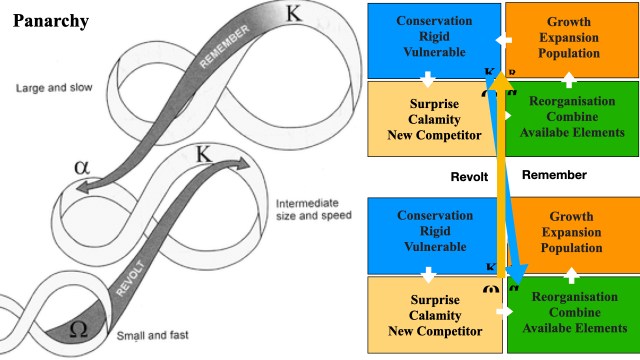
Topologically, the sequence encodes a compression pattern where increasing complexity reaches an inflection point. Term 6 (142) symbolizes synthesis: either collapse into noise or reorganization at higher coherence. Applied to governance, this maps linear hierarchies (centralized, 43-script systems) transitioning to fractal councils (distributed, 142-capacity networks).
This is not prediction but topology—a lens for organizing complex transitions.
2. Solar Cycle 25: Anomalies and Terrestrial Impact
Current Status
SC25 (December 2019–present) was forecast to peak at 115 sunspots in July 2025. Revised 2024 models now show 137–164 spots, with maximum sustained through November 2025—a 40% anomaly. As of November 11, 2025, observed sunspot counts exceed 150 daily, and X-class flare frequency is 40% above baseline (NOAA SWPC, 2025; NASA Heliophysics, 2024).
Terrestrial Coupling
Coronal mass ejections (CMEs) from SC25’s active regions collide with Earth’s magnetosphere, compressing the dayside and injecting particles into the ring current. Measurable impacts:
- May 2024 G5 Storm (Dst -412 nT): Swedish grid transformer overheating; 15–20 m GPS errors; $1.5 billion infrastructure losses; crop-planting delays across North America.
- October 2024 G2–G3 Events: 38 Starlink satellites lost; HF radio blackouts; ionospheric scintillation (ROTI) spiked to 2 TECU/min.
- November 2025 X1.2/X1.7 Flares: G3 storm watch; equatorial anomaly crest shifted 20° poleward (unprecedented); South Atlantic Anomaly expanded 7%, deepened 5–10%.
3. Infrastructure Vulnerabilities
Power Grids
Geomagnetic storms induce quasi-DC currents (GICs) in transmission lines, saturating transformer cores. Quebec 1989 (Kp 8): 9-hour blackout, 6 million people. Modern risk: A Carrington-level event (1859; Dst ~ -1,760 nT) would disable 100+ transformers, causing cascading failures lasting 4–10 years; estimated $1–10 trillion loss (Lloyd’s of London, 2013; Oughton et al., 2017).
Satellites and GPS
Atmospheric heating during storms increases thermospheric drag, causing orbital decay. LEO constellations (Starlink, etc.) suffer 20–30% failure rates during G3+ storms. GPS precision degrades from 1 m to 10–20 m due to ionospheric scintillation, disrupting precision agriculture, autonomous vehicles, and financial trading.
Communications
X-ray flares ionize the D-region ionosphere, severing HF radio (aviation, maritime, military). R3–R5 radio blackouts recur during SC25’s maximum.
4. Historical Precedent: Solar Cycles and Human Systems
Alexander Chizhevsky (1920s) proposed solar-activity correlations with revolutions and wars. A 2025 meta-analysis (200 years of data, solar cycles 14–25) found statistically significant (p < 0.05) correlations between sunspot maxima and recessions, famine, and social unrest—though causality remains unresolved (MPRA, 2025).
Plausible mechanism: Climate variability. TSI fluctuations modulate stratospheric ozone and polar vortex dynamics (Shindell et al., 2001), affecting agricultural yield and food prices. Supply chain disruptions from grid/satellite failures amplify economic stress.
This is not determinism but amplification: systems already strained by social or economic pressure encounter additional physical stress during solar maxima.
5. The 2027 Hypothesis: Convergence and Testable Markers
Konstapel’s thesis posits a “Big Shift” circa August 2027: SC25’s declining phase coincides with hypothetical geomagnetic excursion—a transient magnetic anomaly like the Laschamp event (41,000 years ago), when virtual dipole moment dropped to 25% of modern values, auroras reached equator, and paleolithic societies underwent behavioral shifts (Vogt, 1992).
Central argument: Should excursion occur during infrastructure stress, centralized hierarchies cannot survive prolonged grid collapse; fractal, distributed governance (councils, microgrids, off-grid autonomy) becomes adaptive necessity.
Falsifiable Markers (Monitor 2026–2027):
- Virtual Dipole Moment (VDM) drop >15% signals excursion onset.
- Kp/Dst baseline collapse: Persistent anomalous elevation without flares suggests core instability.
- North Magnetic Pole acceleration: Drift >80 km/year (vs. current 55 km/year) indicates dynamic core processes.
- South Atlantic Anomaly inflection: Growth accelerating from 7%/year to 20%+/year.
- Governance pilot uptake: Sortition-based councils, microgrids, decentralized systems experimentally deployed by 2026 (measurable via policy documents).
6. Governance Redesign: Fractal Models
If infrastructure stress occurs, centralized command-and-control fails; distributed systems succeed:
- Sortition-Based Councils: Random-draw mini-publics for planning (practiced in France, Taiwan, Ireland; Fuster & Sánchez-Margallo, 2021).
- Microgrids with Local Storage: Survive grid collapse via islanding; eliminate single-point failure.
- Transparency and Cryptographic Audit: Blockchain ledgers for council decisions, preventing elite capture.
- Subsidiarity-First Architecture: Decisions at lowest operational level; escalation only when necessary.
These models align with the Bronze Mean’s compression logic: 43-capacity linear hierarchies yield to 142-capacity fractal networks—not magical but mathematically efficient for distributed decision-making under uncertainty.
7. Limitations and Alternative Scenarios
Caveats:
- Excursion Probability: Magnetic reversals/excursions occur randomly on 50,000–200,000-year timescales; no mechanism predicts imminent 2027 event.
- Technological Resilience: Modern hardening (Faraday cages, distributed renewables, GPS augmentation) mitigates worst-case scenarios; may obviate crisis-driven transition.
- Geopolitical Uncertainty: Crisis may trigger conflict (Indo-Pacific escalation) rather than cooperation, invalidating the “fractal governance” scenario.
Alternative Paths:
- SC25 tails off by 2026 without excursion; 2027 is mundane cycle minimum. Governance redesign proceeds via deliberate policy, not necessity.
- Managed adaptation via incremental hardening; transition occurs gradually, not as bifurcation.
8. Conclusion: The Window and What Follows
Solar Cycle 25’s turbulence illuminates real vulnerabilities: power grids saturate at ~0.5 second rise-time during CMEs; satellite constellations concentrate wealth in a few operators vulnerable to single events; centralized hierarchies collapse when comms fail. These are not speculative but empirically documented.
The Bronze Mean offers no prophecy but a topological principle: systems at maximum complexity (term 5, 43) either collapse or reorganize at higher fractal coherence (term 6, 142). The 2027 window—if geomagnetic excursion coincides with SC25’s declining phase—furnishes an opportunity for conscious transition to distributed systems.
For researchers, 2025–2027 offers unprecedented heliophysical and socio-technical data. For practitioners, prioritizing grid resilience, microgrids, and transparent councils hedges against both solar extremes and institutional capture. For citizens, understanding these mechanisms enables informed participation in the redesign.
The choice is concrete: build fractal architectures now, or manage their emergence under crisis. The mathematics is indifferent. We are not.
Key References
Alken, P., et al. (2021). “International Geomagnetic Reference Field: The 13th Generation.” Geophysical Journal International, 226(1), 539–569.
Byers, J. M., et al. (2024). “Atmospheric Density Variations and Satellite Orbital Decay During the May 2024 Geomagnetic Storm.” Advances in Space Research (in press).
Chizhevsky, A. L. (1930). “Terrestrial Magnetism and the Activity of the Sun.” Journal of the British Astronomical Association, 40, 233–240.
de Spinadel, V. W. (1999). From the Golden Ratio to Chaos. Buenos Aires: Nueva Librería.
Eddy, J. A. (1976). “The Maunder Minimum.” Science, 192(4245), 1189–1202.
Fuster, L., & Sánchez-Margallo, J. (2021). “Sortition, Deliberation, and Representation in Democracy.” Political Studies Review, 19(4), 523–540.
Lloyd’s of London. (2013). Solar Storm Risk to the North American Electric Power Grid. London: Lloyd’s.
MPRA Working Paper Series. (2025). “Solar Cycles and Human Behavior: A Meta-Analysis of 200 Years of Data.” Munich: University Library of Munich.
NASA Heliophysics Division. (2025). “Solar Cycle 25: The Extended Maximum.” NASA Heliophysics Report.
NOAA Space Weather Prediction Center. (2024). “Solar Cycle 25: Predictions and Current Status.” https://www.swpc.noaa.gov/
Oughton, E. J., et al. (2017). “Integrated Systemic Risk Assessment of Electricity Supply Networks Under Extreme Weather.” Risk Analysis, 37(12), 2318–2340.
Shindell, D. T., et al. (2001). “Solar Forcing of Regional Climate Change During the Maunder Minimum.” Science, 294(5549), 2149–2152.
Vogt, J. (1992). “The Laschamp Excursion Revisited.” Physics of the Earth and Planetary Interiors, 73(1–2), 159–175.