
J.Konstapel Leiden, 12-11-2025.
Questions or interested to participate in my project suse the contact form.
I have no doubt that our world is destroyed by patriarchs.
The new matriarchy isn’t patriarchy with a woman in charge—it’s different in every way.
The upcoming total solar eclipse on August 2, 2027, in the temple of the Sun in Luxor, Egypt, and the Ka’bah at Mecca is not only a physical but also a symbolic event because the female moon blocks the male sun in a place that was a center of the goddess.
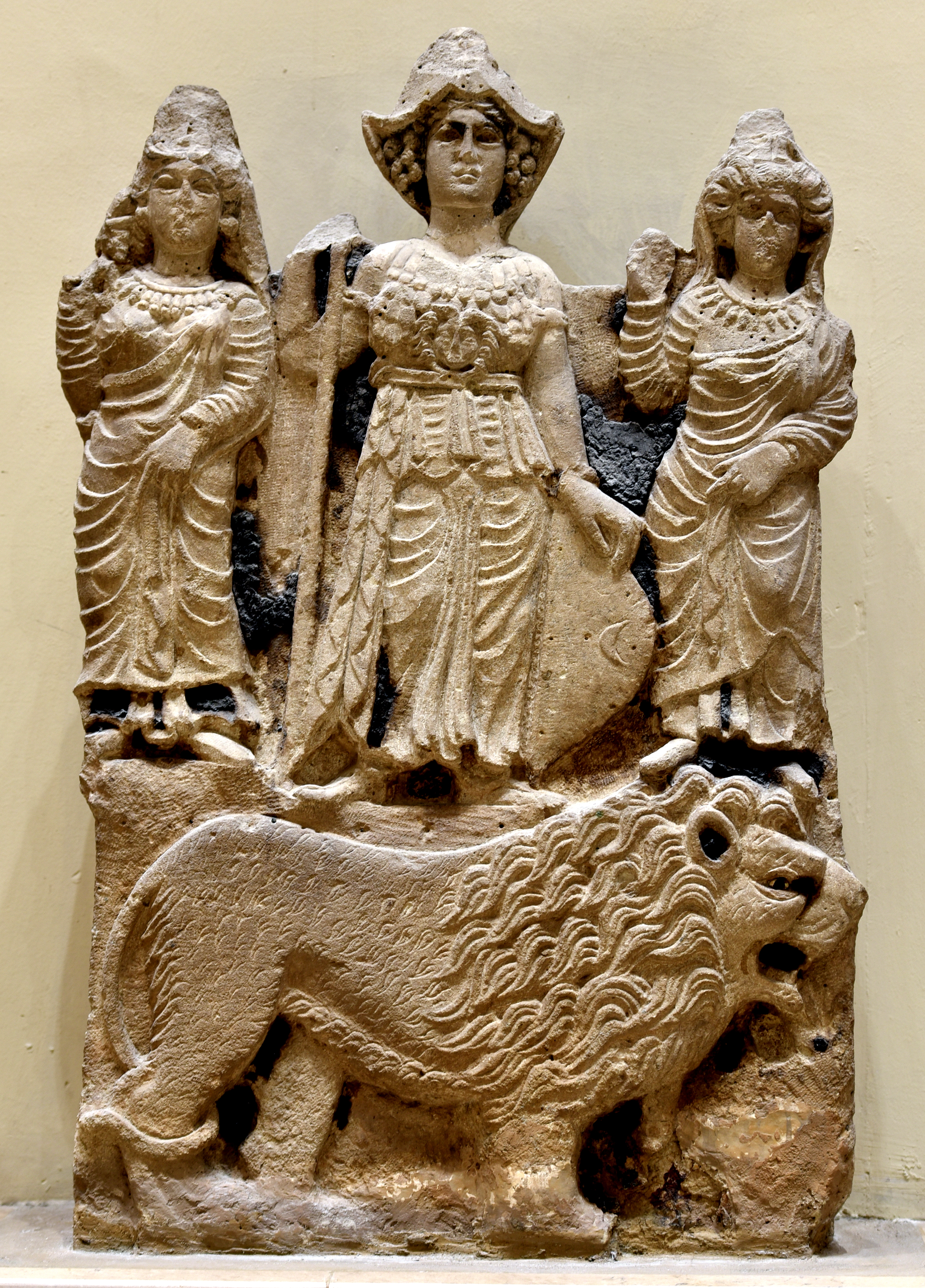
This is blog the fusion by claude of two Dutch blogs:(2) Het Nieuwe Matriarchaat and De (1) Terugkeer van de Moedergodin, both about the mother goddess and her role in society.

This is the fusion of two investigations: (1) how patriarchal consciousness systematically severed cyclical awareness through theological monotheism and technological abstraction, and (2) how the actual structure of a matriarchal society operates through the seasonal wheel, Fiske’s relational modalities, and concrete practices of regeneration. Not nostalgic recovery, but structural reconstruction.
PART I: THE DIAGNOSIS—How Patriarchy Severed Cyclical Consciousness
1. Patriarchy as Violence Against the Seasonal Wheel
The Problem Made Visible: American Patriarchy
Contemporary American conservatism legitimizes paternal physical violence as moral correction. This is not accidental. Violence belongs to Authority Ranking (AR)—the relational modality of hierarchy enforced through demonstrated dominance.
Both Alan Fiske’s Relational Models Theory and George Lakoff’s cognitive linguistics of political morality make this visible: conservatives structure governance on the “Strict Father” family model (AR + MP), while progressives imagine the “Nurturing Parent” (CS). The asymmetry reveals the problem: patriarchal systems have privileged exactly two of Fiske’s four modalities while systematically suppressing the other two.
Fiske’s Four Relational Modalities: The Natural Structure
The anthropologist Alan Fiske identified four relational templates that appear across all human cultures—not as cultural preferences but as the actual structure of how being organizes itself:
- Communal Sharing (CS): “We are one family; the harvest belongs to all; each receives according to need.”
- Authority Ranking (AR): Hierarchy where authority derives from accumulated wisdom demonstrated in service to community.
- Equality Matching (EM): Peers with different capacities coordinating without hierarchy—”You did this for me; I will do that for you.”
- Market Pricing (MP): Abstract quantification of value; proportional exchange; commodification.
These are not equally distributed across human life. They organize themselves naturally into the seasonal wheel.
The Seasonal Mapping: Being’s Actual Structure
Winter (Authority Ranking): Scarcity, gathering inward, limits. Authority derives from accumulated wisdom—elders who have survived winters know what stores to preserve, which practices ensure survival.
Spring (Equality Matching): Emergence, renewal, peer innovation. How to prepare fields? When to plant? Which seeds to experiment with? Peers with different ideas and capacities must coordinate without hierarchy.
Summer (Market Pricing): Abundance, growth, expansion. Exchange becomes possible and rational. Abstract quantification of value emerges naturally.
Autumn (Communal Sharing): Harvest gathered in; the year’s abundance distributed. Fundamental CS: “We are one people; the harvest belongs to all; each receives according to need.”
This is the structure of being itself—the rhythm that governs all living systems. Each season calls forth its appropriate relational modality; trying to suppress three modalities in favor of one creates ontological incoherence.
2. The Patriarchal Project: Perpetual Summer as Civilizational Delusion
The Fundamental Incoherence
Patriarchal civilization operates on a core delusion: the attempt to maintain perpetual summer—eternal growth, expansion, accumulation, production. Absolute refusal to enter autumn (redistribution), winter (rest and limits), or spring (peer innovation that threatens centralized control).
This is not merely ambitious. It is ontologically incoherent. A system trying to sustain Market Pricing and Authority Ranking while denying Equality Matching and Communal Sharing has severed itself from the actual structure of being. It cannot succeed because being itself is structured otherwise.
The consequences are now catastrophically visible: ecological collapse, psychological dissociation, the reduction of all relationships to transactional exchange, accumulation without meaning, authority without wisdom.
How This Severing Was Accomplished: The Historical Mechanism of Theological Violence
Gerda Lerner documented the precise mechanism through which patriarchy was constructed. It was not inevitable; it was deliberately built through institutional transformation, legal codification, and theological reconstruction.
The Syncretic Origins of Yahweh (Not Pure Monotheism)
Biblical scholars now establish that Yahweh originated in Midianite and Edomite pastoral traditions (northwestern Arabian Peninsula and southern Jordan). The Kenitite hypothesis identifies Yahweh as originally a deity of the Kenitite or Midianitie tribes before becoming “the God of Israel.”
Egyptian Late Bronze Age texts mention a group called the Shasu, with specific references to “Shasu of YHW”—locating Yahweh worship in the Edom/Seir region. This was not unique revelation but regional practice.
Crucial: Early Israelites adopted religious practices from their Canaanite neighbors. The Canaanites worshipped a pantheon including El, Baäl, and Asherah. Yahweh was initially one god among many, part of a syncretic religious ecology.
The Archaeological Evidence: “Yahweh and His Asherah”
At Kuntillet Ajrud (northeastern Sinai), inscriptions explicitly read “Yahweh of Samaria and his Asherah”—proving that in actual early Israelite practice, Yahweh was worshipped WITH the feminine divine as his consort. This was legitimate religious practice, not deviation.
The erasure was deliberate editorial work by later scribal authorities. Torah editors ensured that goddess worship appeared in biblical texts only as apostasy and idolatry, removing textual evidence of what had been normative practice.
Legal Institutionalization: Codex Hammurabi and Patriarchal Law
As Lerner showed, this theological shift paralleled legal-economic transformation. The Codex Hammurabi (and similar ancient Near Eastern legal codes) formally institutionalized women’s subordination through:
- Laws defining women’s roles and statuses based on sexual bonds to men
- Distinction between “respectable women” (bound to one man) and those deemed non-respectable
- Property inheritance systems privileging patrilineal descent
- Formalization of hierarchical family structure as economic foundation
Legal codes were not abstract justice—they were mechanisms constructing patriarchal economic systems. As societies shifted from hunting-gathering to settled agriculture, controlled reproduction became essential to accumulating heritable property. Women’s sexuality and fertility had to be controlled and legally regulated.
The Mother Goddess: What Was Lost
The Mother Goddess in ancient manifestations was inseparable from cyclical consciousness: Demeter and seasonal return, Asherah and fertility-death-regeneration, the Morrigan and threshold passage, Hecate and transformation. These were not “female versions” of male gods. They embodied cyclical transformation itself.
When Yahweh absorbed divine authority into a singular, transcendent, masculine, non-cyclical form, the entire structure of consciousness shifted. The transcendent God stands outside cycles. He does not die and return—He is immortal and infinite. He does not receive offerings that nourish earth—He demands sacrifice acknowledging His supremacy. He rules by decree from above.
This was systematic epistemic violence: the deliberate reconstruction of theology to justify the erasure of cyclical consciousness.
Constantine and the Political Consolidation: Church-State Fusion
What monotheistic theology initiated, political institutionalization completed. Constantine’s crowning as Christian emperor marked the turning point: the fusion of church and state power. This entanglement strengthened the position of male clergy and established the institutional foundations for systematic patriarchal control.
The theological victory became political monopoly. Religious authority and state authority reinforced each other. Alternative consciousness—cyclical, regenerative, feminine—became heresy.
Cultural Capitalism: The Final Consolidation
Industrial and contemporary “cultural capitalism” completed this consolidation through:
- Cult of the male entrepreneur as civilization’s hero
- Emphasis on material wealth accumulation as the measure of success
- Competition and individual gain as organizing principles
- Systematic underrepresentation of women in positions of economic-political power
- Abstraction of value to quantifiable metrics, rendering cyclical and qualitative knowledge “unproductive”
This was not organic cultural development. It was deliberate ideological construction supporting economic extraction.
3. The Technological Completion: From Context to Abstraction
The Device Paradigm: Destroying Context
Albert Borgmann identified how technology systematically replaces engaged, contextual relationship with abstract, mediated consumption. Religious severing initiated the disconnection; industrial capitalism completed it through:
- Abstracting production away from place and season
- Mechanizing agricultural processes
- Rendering time homogeneous (clock time replaces seasonal time)
- Destroying ritual and ceremony as epistemically necessary
- Marginalizing embodied, cyclical knowledge
The “frame” technology creates puts distance between producer and consumer, making products into commodities, knowledge into data, relationships into transactions.
Geometry as Ultimate Abstraction
Euclidean geometry represents the apex of abstraction—every variation stripped away, everything reduced to two variables (X, Y) and abstract relationships (ordering, ranking, connection, equality/inequality).
But this is only one geometry. Renaissance perspective revealed that Euclidean viewing is itself a peculiar angle. Projective and hyperbolic geometries describe very different spatial logics—infinite, unbounded, cyclical rather than linear.
Recovering cyclical consciousness requires recovering non-Euclidean ways of thinking: understanding that hierarchy is imposed structure, not natural order; that time is cyclical, not linear; that meaning emerges from particular contexts rather than existing in abstract space.
PART II: THE RECONSTRUCTION—The New Matriarchy as Structural Practice
4. What Is a Matriarchy? (It’s Not Patriarchy with Women in Charge)
A matriarchy is fundamentally different from patriarchy with reversed hierarchy. Instead of AR + MP (Authority Ranking + Market Pricing, the relational modalities of authority and commodification), a matriarchy centers on CS + EM (Communal Sharing + Equality Matching)—the relational modalities of culture, creativity, and regeneration.
Patriarchy: AR + MP = Authority + Economy
Matriarchy: CS + EM = Culture + Collaboration
EM and CS are bridges between the extremes (Winter/AR and Summer/MP), creating cyclical balance rather than perpetual extremism.
The Core Features (According to Contemporary Researchers)
Heide Göttner-Abendroth’s research on actual matriarchal societies identifies:
- Consensus and Equality: Decisions made through assembly and agreement, not hierarchical decree
- Matrilineal Inheritance: Property and clan identity pass through the female line, creating economic stability
- Shared Economic Structures: Ownership is collective; resources circulate through the community
- Central Role of Women: Especially mothers, holding authority in family and community, though power is shared
- Cultural and Spiritual Values: Celebration of female creativity, fertility, and regeneration through ritual and ceremony
Contemporary researchers confirm these structures:
- Amitai Etzioni (Communitarianism): Emphasizes community values and social cohesion—CS principles
- James C. Scott (Egalitarian Societies): Examines societies where hierarchy is minimized—EM principles
- Carol Gilligan (Ethics of Care): Centers relationships, empathy, mutual responsibility—CS principles
- Amartya Sen (Feminist Economics): Argues for wellbeing, equality, and social justice—EM principles
- Gerda Lerner: Documented that matriarchies actually existed and offer valuable lessons for contemporary reconstruction
5. The Seasonal Wheel: The Celtic Model as Template
Eight Seasons, Eight Festivals, One Cycle
The Celtic Wheel of the Year provides a concrete operational structure for cyclical consciousness. Each season has specific festivals, moon phases, and associated relational modalities:
Samhain (November 1) — New Moon
Boundary between light and dark half of year. Thinning of veils. Transition and mystery.
Yule (December 21) — Dark Moon
Winter solstice. Longest night. Celebration of returning light. Winter/AR modality at its peak.
Imbolc (February 1) — Waxing Moon
First signs of spring. Purification and renewal. Brigid. Beginning of emergence.
Ostara (March 21) — Full Moon
Spring equinox. Balance of day and night. Rebirth and fertility. EM modality begins.
Beltane (May 1) — Waning Moon
Fertility festival. Peak vitality. Transition from spring to summer. Height of EM-to-MP shift.
Litha (June 21) — Full Moon
Summer solstice. Longest day. Peak abundance. Summer/MP modality at its zenith.
Lughnasadh (August 1) — New Moon
First harvest. Thanksgiving. Beginning of autumn. Shift from MP to CS begins.
Mabon (September 21) — Waning Moon
Autumn equinox. Final harvest. Balance and gratitude. CS modality activated.
Sowing-Harvesting, Trading-Giving, Playing-Cooperating
The seasons correspond to human activities:
- Spring/EM: Sowing, planting, playing, experimenting, trading (reciprocal exchange)
- Summer/MP: Growth, abundance, competition, pricing, quantification
- Autumn/CS: Harvesting, gathering, sharing, giving, cooperating
- Winter/AR: Storing, conserving, rest, authority of accumulated wisdom
Each season is complete education in how to live. A mature person learns all four modalities; a mature society honors all four seasons. Attempting to suppress three modalities creates psychological and social disease.
6. Matriarchal Technology: Recovering Tools for Regeneration
Technology itself is not the problem—the question is: What is technology in service of? Matriarchal technology asks fundamentally different questions:
- Does this tool help humans participate more consciously in cycles, or does it obscure them?
- Does this strengthen community relationships or atomize them?
- Does this serve regeneration, or does it enable extraction?
- Can it be embedded within seasonal rhythm rather than demanding rhythm conform to it?
Concrete Matriarchal Technological Structures
1. Human-Centered Design
Users participate actively in design. Empathy maps and iterative feedback loops ensure technology serves actual human needs, not abstract profit.
2. Emotion-Driven Interfaces
Interfaces that respond to emotional and social context, adapting to support wellbeing rather than maximize engagement/extraction.
3. Makerspaces and Fab Labs
Shared workshops where people create together, learning is collective, and tools are communal resources rather than commodities.
4. Digital Co-Creation Platforms
Real-time collaboration (Miro, Figma) and open-source development where diverse perspectives combine. Linux, Mozilla, Wikipedia as models.
5. Decentralized Autonomous Organizations (DAOs)
Governance through shared decision-making and transparent smart contracts. All members vote; decisions emerge from consensus. No central authority accumulating power.
6. Holacracy and Distributed Leadership
Self-organizing teams (circles) that work autonomously but connect within larger networks. Authority distributed, not concentrated. Decisions emerge from coordination rather than decree.
7. The Sacred Calendar as Epistemic Practice: From Ritual to Knowledge
The Eleusinian Mysteries as Model
The Eleusinian Mysteries show what recovered cyclical consciousness looks like in practice:
- Held twice yearly (spring and autumn) honoring Demeter and Persephone
- Year-long preparation including purification rituals and instruction
- Reenactment of the myth (death-and-return, the fundamental cycle)
- Experience of direct knowledge beyond rational abstraction
- Community bound together through shared sacred practice
Ritual is not ornamental. Ritual is the cognitive technology through which consciousness aligns with the structure of being itself. Ceremony marks transitions. Sacred practice integrates the body, emotion, and community into knowing—not merely abstract information.
8. Culture vs. Economy: The Seasonal Society
A Seasonal Society (term proposed by contemporary researchers) balances two complementary domains:
CULTURE (CS + EM): Art, creativity, ritual, care, education, relationships, spiritual practice—activities that bind communities and inspire collective meaning.
ECONOMY (AR + MP): Production, exchange, accumulation, governance through authority—necessary functions but not the whole of life.
Patriarchal systems privilege economy; they attempt to make economic logic (perpetual growth, commodification) apply to everything, including relationships and culture.
Matriarchal systems privilege culture; economy becomes a servant of cultural regeneration, not its master. Art, ritual, care, and community are not luxuries to be squeezed into whatever time remains after economic production. They are the heart of civilization. Production and exchange serve these purposes, not the reverse.
The Keltische model explicitly recognizes the role of the Bard—the artist and storyteller—as holding high honor. This is the opposite of industrial capitalism, which marginalizes cultural creators as unproductive.
PART III: The Ground of Recovery
9. Embodied Cognition: Why Body Wisdom Is Not Inferior
Lakoff and Johnson’s Embodied Cognition Theory demonstrates that knowledge emerges from bodily engagement, not disembodied abstraction. The suppression of embodied knowledge was not accidental intellectual choice—it was political elimination of women’s authority (herbal healing, midwifery, intuitive knowing).
Intuition is embodied reason grounded in particular, lived experience—not inferior to abstract principle but prerequisite to wisdom.
Candace Pert’s neurochemistry confirms that emotions and embodied responses are integral to cognition. The body’s cyclical wisdom (menstrual cycles, circadian rhythms, seasonal adaptation) was not a weakness to overcome but intelligence to honor.
10. Knowledge Systems Are Themselves Cyclical
Thomas Kuhn showed that science itself operates cyclically: paradigms emerge, achieve dominance, enter crisis, and shift. Paul Feyerabend demonstrated there is no singular rational method—only contingent historical practices. Nassim Taleb calls this “tinkering.”
The very structure of how knowledge develops is cyclical, not linear. The attempted linearity of patriarchal “progress” was itself a deviation from how knowledge actually evolves.
Conclusion: The Choice Before Us
The Mother Goddess does not return through romantic nostalgia. She returns because patriarchal civilization is collapsing under its own contradictions. A system demanding perpetual growth on a finite planet, severing consciousness from embodied reality, replacing all relationships with market transactions, treating regeneration as economically irrelevant—such a system cannot sustain itself.
The question is not whether cyclical consciousness will return. It must, because the actual structure of being is cyclical.
The question is whether it returns consciously—through deliberate practices of recovery, seasonal ritual, CS + EM cultural regeneration, distributed authority, and the regrounding of technology in service to community—or unconsciously, through catastrophic collapse.
Summary of Argument Structure
Part 1: The Problem Diagnosed
American conservatism legitimizes paternal violence. This reveals how patriarchal consciousness privileges AR + MP while suppressing CS + EM. This creates ontological incoherence.
Part 2: How Patriarchy Was Constructed (The Historical Why)
The shift was not inevitable. It required: (a) theological reconstruction—Yahweh consolidated divine authority from syncretic practice, erasing Asherah; (b) legal institutionalization—codes like Hammurabi’s formalized women’s subordination; (c) political fusion—Constantine joined church and state authority; (d) cultural capitalism—made male entrepreneurial accumulation the measure of civilization.
Part 3: How Technology Completed It
Religion initiated; technology completed. Device Paradigm abstracted consciousness from cycles and contexts. Euclidean geometry represented ultimate rationalization.
Part 4: Structural Alternative—The New Matriarchy
Not women in charge, but CS + EM centered. Organized around actual seasons. Ritual as epistemic practice. Culture (not economy) as civilization’s measure. Distributed authority. Regeneration as fundamental principle.
Part 5: The Ground of Possibility
Embodied cognition shows body-wisdom is not inferior. Knowledge systems are themselves cyclical (Kuhn, Feyerabend). Being is structured cyclically. Recovery is possible.
Conclusion: The Choice Before Us
The Mother Goddess does not return through romantic nostalgia. She returns because patriarchal civilization is collapsing under its own contradictions. A system demanding perpetual growth on a finite planet, severing consciousness from embodied reality, replacing all relationships with market transactions, treating regeneration as economically irrelevant—such a system cannot sustain itself.
The question is not whether cyclical consciousness will return. It must, because the actual structure of being is cyclical.
The question is whether it returns consciously—through deliberate practices of recovery, seasonal ritual, CS + EM cultural regeneration, distributed authority, and the regrounding of technology in service to community—or unconsciously, through catastrophic collapse.
A matriarchal society does not mean women dominate. It means:
- Organizing human life around actual seasons rather than perpetual extraction
- Restoring ritual and ceremony as epistemic practice
- Reintegrating death, menstruation, rest into sacred rather than obscene categories
- Restoring embodied knowledge (intuition) as legitimate mode of knowing
- Rebalancing relational modalities across seasons
- Understanding authority as derived from demonstrated wisdom in service to community
- Making culture (CS + EM) the measure of civilization, not economy (AR + MP)
- Recovering care as the fundamental activity sustaining all life