

J.Konstapel, Leiden, 13-6-2o24.
Humans create their outside Material world without understanding they express their inside outside to understand what they are trying to accomplish..
Magic
In the letter of 1947 Wolfgang Pauli writes to Carl Jung:that his “attention is focused strongly on the influence of archetypal concepts … on scientific definitions”and that he will demonstrate this with the dispute between Johannes Kepler and a hermetic alchemist of those days, Robert Fludd, which was”the collision between the magic-alchemistic and the (new in the 17th century) scientific way of thinking”.
Collision
Then he adds that this was”a collision that I believe recurs on a higher level in the unconscious of modern man”.
This is blog is about Magic and therefore about Psycho-Physics..
Warning: Experimenting with Magic is dangerous.
push here to go to the Conclusion.
push here to go to the Summary
This blog explores the resurgence of magic and mysticism from the Renaissance in modern times. It highlights how the Renaissance was not only a period of scientific and artistic advancements but also rich in magical thinking and practices.
1. Introduction
Mind
The Universe is totally unstructured.
The structures in the universe emerge from our own minds and can be explained by Psychology.
Magma
Magma is the undifferentiated, pre-logical reality that exists before our minds impose order and meaning through the frames of language and logic.
Religion
is an articulation of the experience of the Beauty of the Universe.
Playfull Creation
If we create our own reality is it possible to create what we want? Experiments show that this can oy be done with a playfull mentallity.
Everything is made out of Light
Introduction to the Practical Magic of Franz Bardon
want to read more about Magic push here.
Visualize
In these books you will learn that magic is only possible if you are able to visualize what you want to happen.
This blog explores an alternate Renaissance philosophy, one that might have flourished in our time if the bankers of Venice and Amsterdam together with the Italian and Dutch goverment hadn’t squashed the burgeoning ideas of Egyptian Alchemy.” put into the story of the Rosicrusian movement that originated in Africa.
Introduction to Hermetic Philosophy
The introduction of the Hermetic philosophy was blocked in the 17th century with a lot of violence by the rulers of Europe, the bankers of Venice and Amsterdam.
Gnosis
Around the 12th century the same happened.
The Gnosis was stopped with brutal violence.
From the beginning of of western religion the gnosis was blocked by the Rulers and their priests.
The simple reason is that rulers don’t like people that believe in their own experience.
This also blocks humans with abnormal (paranormal) capabalities like Solomo.

Catharism, a dualistic Christian movement, emerged in 12th-century Languedoc, France. Influenced by Manichaeism, Bogomilism, and Gnosticism, it opposed the Roman Catholic Church’s wealth and corruption.
The Cathars believed in two divine principles: a good God of the spiritual world and an evil force of the material world.
Their rejection of Catholic sacraments and unique rituals led to their persecution during the Albigensian Crusade and the Inquisition, nearly wiping out the movement.
Alchemy
The first part of this chapter introduces the great King Solomon who according tot he “Kebra Negast” was bewitched by the Queen of Sheba whose sun Menelik stole the Arc of the Covenant and brought it to Ethiopia.
Then we move from Solomo to Egypt the source of Alchemy that came out of West Africa with the religion of The Yoruba. This religion is now the biggest in the World.
In the next part we move to the England in the time of John Dee one of the biggest scientists of the Renaissance who hoped he had found the Key of Solomo by talking with Angels.
In the end of this blog I will show you why current science is becoming Magical.
the Sigil of Ameth
The Sigil of Ameth is a complex design composed of two circles, a central pentagram, three heptagons, and bears the names of angels alongside various appellations of the Judeo-Christian-Islamic God Yahweh.
It was used by John Dee in his communication with Angels.
The oldest source is the Sworn Book of Honorius probably a result of a conference of magicians around 1500. the older (jewish) source is related to King Solomon...
King Solomo
King Solomon’s figure is intertwined with tales of supernatural powers and knowledge in various traditions. While the Hebrew Bible doesn’t explicitly mention his magic, later interpretations credit him with extraordinary abilities, ranging from controlling demons to understanding animal languages. These stories stem from Judaic, Islamic, and occult traditions, often based on apocryphal texts
Kaballah
Jewish mysticism, particularly Kabbalah, delves into profound spiritual concepts using symbolism, esoteric teachings, and sacred geometry. It explores the infinite divine essence (Ein Sof), the creation through divine emanation (Sefirot), and the human role in spiritual ascent and cosmic repair (Tikkun Olam). Sacred geometry, including the Tree of Life, and the Hebrew alphabet imbued with numerical and symbolic values, play a significant role in Kabbalistic thought. These rich traditions offer a unique perspective on the divine, creation, and the human experience, but critical engagement is essential to fully grasp their complexities.


The 22 letters of the Hebrew Alphabet are a combination of the Trinity (3) , the 7 (3+1+3)Planets and 12 (4x3) Signs of the Zodiac.
The Origin of Magic lies in Ancient Egypt
Egyptian Magic comes from the Yoruba in Punt
Punt is the Yoruba culture which is also called Vodou, Santeria, Candomblé.
All these version are mixed with local traditions and Katholic traditions.
Yoruba religion is practiced by 500 million people in the wordld.
Its devation method IFA looks like the I Ching.
The priest are called babalawo.

2. The World of John Dee
Gordiano Bruno
In 2010 I wrote about the Renaissance and especialy about Gordiano Bruno who was burned On 17 February 1600, in the Campo de’ Fiori.
He was a highly influential Magi and probably the creator of the Rosicrucian movement.
Hermes Trismegistus

Hermes Trismegistus “Thrice-Wise“was named Thoth or Djehuti in Ancient Egypt. The Djed of Djehuti represents the Power of the Snake (the Kundalini) in the Spinal Column.
Thoth was the Scribe of the Gods, the inventor of writing, and was usually depicted in hieroglyphics with the head of an Ibis Bird.
This head of the IBIS carried the Moon, the Planet of the Mother God, The Night and of Magic.
The Moon represents a complentary Universe that was found by Wolfgang Pauli, the co-inventor of uantum Mechanics and co-researcher of Carl Jung..
Bruno was trained in the memory palace and knew about magic just as Jon Dee, the personal advisor of Queen Elizabeth I.
John de Vere = William Shakespeare
There are many clues that point to John de Vere as William Skakespear.
with many references in his work to John Dee.
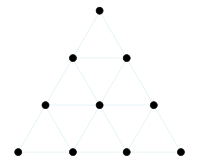
John Dee->the Triangel
communicated with the angels by his compagnian Edward Kelly He was convicted of fraud and lost his ears as a result before he met John dee. Kelley was a scryer. Scrying is the practice of looking into a suitable medium (such as a crystal ball, mirror, or other reflective surfaces) with the belief of gaining some sort of mystical or divinatory insight. In the context of Kelley and John Dee’s work, Kelley claimed to be able to communicate with angels through scrying.
Secret Sigil John Dee
Alphabet of Life
`the history of the Alfabet by Kim Veltman of the McLuhan Institute:
Enochian Magic
TThe Monad


Uniting the Monad
John Dee tried to unite the Nominalist and the ~Realists by finding the Monad (the Egg).
While the overall shape resembles an egg, the Monad incorporates many other symbols and geometric shapes.
Dee believed it held the key to understanding the universe and its underlying principles.
Hermeticism
Dee was deeply influenced by Hermeticism, a philosophical system that emphasized the connection between the microcosm (humanity) and the macrocosm (the universe).
The nicro and macro are part of a self referencing system that begins with the nothing . becoming a Pulse <.>.
He believed in the potential for humans to gain knowledge and power through studying these connections.
Eliphas Lévi
3. Modern Mystics and Geometry
Terence Mckenna Timewave Zero
predicted the coming of the new Wave.
Modern Geometry
In the link above I explain the link between the Hermetian Geometry and the current Geometry of Physics.
E8
The E8 geometry explain the symmetry of the partcles and contains the Seal of Solomon.

From Ideology to Geometry


the AI Super Mind vs Super conscioussness
Sri Aurobindo
Sri Aurobindo believed that the universe is evolving towards a higher state of consciousness, and that humans are capable of participating in this evolution.
ChatCPT is Beating the Human Mind
4. Conclusion
Materialism and gnosis have been at odds for centuries, offering contrasting views on the nature of reality, knowledge, and salvation.
Materialists: The physical world is all there is. Knowledge comes from observation and experimentation. Liberation comes through social change or material improvement.
Gnostics: There is a higher, spiritual reality. Knowledge comes from intuition and mystical experiences. Liberation comes through spiritual enlightenment and gnosis (true knowledge).
This contrast can be traced back to Greek philosophy, early Christianity, the Middle Ages, the Enlightenment, and the 20th century.
Quantum mechanics
Quantum mechanics and gnosis, share intriguing parallels that hint at a profound connection between science and spirituality, potentially supporting the notion that there is no objective reality beyond the mind.
Interconnectedness: Quantum mechanics reveals the interconnectedness of all things, while gnosis emphasizes the oneness of creation.
Observer effect: In quantum mechanics, observation influences reality, echoing gnostic teachings on the role of consciousness in shaping our experience.
Nonlocal nature: Quantum entanglement suggests reality transcends space and time, aligning with gnostic concepts of a transcendent realm.
Carl Jung <.> Wolgang Pauli
The link between Psychology and Physics was researched and discussed by Jung and Pauli who was inspired by dreams and was highly paranormal.
His link to the renaissance was the Alchemist Robert Fludd.
Push here to go back to the beginning
5. Summary
The blog begins by introducing the Renaissance period, highlighting its significance as a time of cultural rebirth and intellectual exploration. It sets the stage for the discussion by emphasizing the lasting impact of Renaissance ideas on modern thought and science.
Chapter 2: The World of John Dee
This chapter delves into the life and work of John Dee, a key figure in the Renaissance known for his contributions to science, mathematics, and magic. Dee’s efforts to unite the Nominalist and Realist philosophies through the concept of the Monad are explored, along with his involvement in Hermeticism and Enochian magic (Constable Blog) .
The chapter also presents the theory that John de Vere might be the real identity behind William Shakespeare, supported by references in Shakespeare’s work to John Dee and esoteric knowledge. It suggests a deeper connection between literature and Renaissance magic .
Chapter 3: The Intersection of Magic and Science
This section discusses the parallels between Renaissance magic and modern scientific principles. It highlights the similarities between Hermetic geometry and contemporary physics, suggesting that ancient knowledge systems may have anticipated modern discoveries (Constable Blog) .
4. Conclusion : Philosophical Debates: Materialism vs. Gnosticism
Here, the blog explores the enduring conflict between materialism and gnosticism, tracing their roots back to Greek philosophy and their evolution through history. It discusses how these opposing views on reality and knowledge influence contemporary thought
Push here to go back to the beginning
6. Next step
I wiil write a new blog to formulte the consequences of a step to Modern Gnosticism.